
Dr. Alam receives NSF award for autonomous aquatic robotics research
Lamar University Assistant Professor of Computer Science Tauhidul Alam has received a $199,839 award from the U.S. National Science Foundation (NSF) to advance research using autonomous robotic systems to monitor changing aquatic environments. 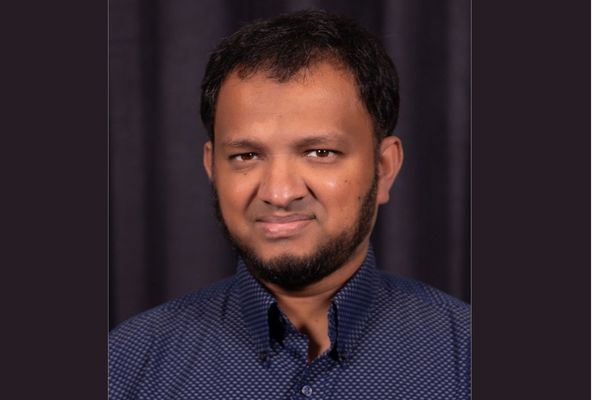
The two-year Engineering Research Initiation award will support Alam’s project, “ERI: Autonomous Monitoring and Planning with Lightweight Robotic Teams Operating in Dynamic Aquatic Environments,” through August 2028.
The project focuses on developing lightweight, cost-effective methods that allow autonomous surface vehicles to monitor water conditions and work together despite limitations in computing power, energy and communication.
“The project aims to develop lightweight, cost-effective methods that enable autonomous surface vehicles to estimate changing aquatic conditions and coordinate under limited computing, energy and communication resources,” Alam said. “We hope to evaluate these methods through simulations and field deployments using multi-modal water-quality sensors.”
Alam said the research was motivated by the challenges associated with monitoring rapidly changing conditions in rivers, lakes, bayous and coastal waters.
“Aquatic water bodies such as rivers, lakes, bayous and coastal waters are increasingly affected by oil spills, chemical releases and harmful algal blooms that can change significantly over hours or days,” Alam said. “Because sparse manual sampling can miss these spatiotemporal changes, I was motivated to investigate how autonomous aquatic robots could provide faster, safer and more repeatable environmental monitoring.”
The research could help scientists and environmental professionals identify and track changing water conditions while reducing the time, cost and human effort required for large-scale monitoring.
Alam said the technology could have applications ranging from environmental stewardship and scientific research to public health protection and responses to contamination events.
“This research could improve our ability to detect and track changing water-quality conditions while reducing the time, cost and human effort required for large-scale monitoring,” he said. “The resulting technologies could support environmental stewardship, scientific discovery, public health protection and more informed responses to aquatic contamination events.”
NSF funding will support the development of environmental field models, lightweight decision-making policies and decentralized methods that allow multiple robotic vehicles to coordinate their activities. The project also will include computer simulations and multi-day field deployments.
Lamar University graduate and undergraduate students will participate in the research, receiving hands-on experience with artificial intelligence, robotic simulation, field experimentation and autonomous water sampling using surface vehicles.
Alam said the award also will help expand research opportunities within Lamar University’s Department of Computer Science.
“The award will strengthen marine robotics and autonomous systems research at Lamar University while creating new opportunities for interdisciplinary collaboration,” Alam said. “It will also expand student research and educational activities in reinforcement learning, AI and multi-robot coordination within the Department of Computer Science.”
For Alam, the award represents both recognition of his research and an opportunity to further establish his work in autonomous systems.
“Personally, this award is meaningful recognition of my work in applied marine robotics and autonomous environmental monitoring,” Alam said. “Professionally, it provides a valuable opportunity to expand my research program and increase the visibility of my work within the broader robotics research community.”
The NSF award period began Sept. 1 and runs through Aug. 31, 2028.