Speech-Language Pathology M.S.
The speech-language pathology program is committed to preparing competent and compassionate clinicians, motivated scholars and ethical professionals for entry into the field of speech-language pathology.
The Master of Science (M.S.) degree program in speech-language pathology at Lamar University consists of 11 academic courses and a sequence of clinical practicum experiences. Students enroll in SPHS 5309 Advanced Clinical Practicum in each semester of the program.
Accreditation
Lamar University's speech and hearing sciences graduate programs—the Doctor of Audiology (residential) and Master of Science in speech-language pathology (residential)—are accredited by the Council on Academic Accreditation in Audiology and Speech-Language Pathology of the American Speech-Language-Hearing Association
American Speech-Language-Hearing Association
2200 Research Boulevard, #310
Rockville, MD 20850
800-498-2071 or 301-296-5700. www.asha.org
First Year
During the first year of graduate studies, clinical practicum experiences are obtained within the Lamar University Speech and Hearing Clinic and other specialty clinics.
Second Year
During the second year, students are placed in externship assignments to develop a comprehensive clinical foundation. Courses are offered online in the final semester at this time to offer maximal flexibility in final-semester externship assignments.
- Pre-requisites and Entry Requirements
- Applicants to the Master of Science in Speech-Language Pathology program should have an undergraduate degree in speech and hearing sciences or a related field.
- Students who do not have an undergraduate degree in speech and hearing sciences may be required to complete prerequisite courses. The following courses are considered prerequisites for the Master of Science in Speech-Language Pathology. These courses may be taken prior to applying for admission into Master of Science in Speech-Language Pathology degree program. Some courses may be taken concurrently with graduate coursework. Determination of suitability for accelerated leveling will be made on an individual basis.
- Prerequisite courses
- SPHS 2372 Phonetics
- SPHS 3310 Language Acquisition
- SPHS 3318 Speech Anatomy & Physiology
- SPHS 4334 Audiology 1
- SPHS 4342 Audiologic Rehabilitation
- SPHS 3314 Speech and Hearing Science
- SPHS 4332 Neurology
- Biological Sciences
- Physical Sciences "Physics or Chemistry"
- Statistics
- Social or Behavioral Sciences
- To apply as a post-baccalaureate student in the Department of Speech and Hearing Science, fill out an application for admission on the CSDCAS website. Students should have 3.0 GPA in their undergraduate degree.
- If you have questions, please email slp@lamar.edu.
- Application Process
Application Requirements
Admissions and Prerequisites
Admission to the MS-SLP program is competitive and requires a baccalaureate degree from an accredited institution, completion of prerequisite coursework, and submission of all materials required by the Lamar Graduate Admissions Office and the department. Specific application requirements and deadlines are published on the program's website. General inquiries may be directed to slp@lamar.edu.
Application Process
Use your name as it appears on your state-issued ID or passport on your application and on all subsequent communication with Lamar University. The submission deadline is January 15; verification by CSDCAS is preferred by February 1. To allow processing time, applicants are encouraged to submit no later than mid-December.
Complete your application to the Master of Science in Speech-Language Pathology (M.S.) by completing ONLY the CSDCAS application at https://csdcas.liaisoncas.com/applicant-ux/#/login. The internal Lamar University application is used only by applicants who need to take prerequisite courses. The CSDCAS application allows you to submit your transcripts, letters of recommendation, personal essay, and writing prompt response in a single portal.
Submit OFFICIAL transcripts from ALL universities you have attended to the CSDCAS portal. Applicants must have a minimum 3.0 overall GPA as calculated by CSDCAS. CSDCAS requires two steps: (1) request official transcripts from each institution you have attended and (2) enter each individual course you have taken on the portal. Both steps are required.
Map your prerequisite coursework on the final tab of the application. Some courses may not be applicable to your undergraduate curriculum. Required prerequisite courses may be taken prior to or concurrent with graduate coursework. Determination of suitability for accelerated leveling is made on an individual basis.
All applicants provide a 1–2 page written personal statement. This statement is your opportunity to present yourself to the admissions committee and share information about who you are. Choose three of the following attributes that you can demonstrate through activities or events as strengths that you will bring to your graduate education, and one attribute that you feel is a weakness — detailing why it is a weakness and how you will leverage your strong attributes to compensate.
Deadlines and Portal Timing
The submission deadline is January 15. Verification by CSDCAS is preferred by February 1. A verified application is one that has been e-submitted, payment received, and ALL required documentation (official transcripts, letters of recommendation, and the personal statement) has been received and verified by CSDCAS.
Applicants are strongly encouraged to e-submit at least four weeks in advance of the February 1 verification date. CSDCAS cannot verify an application until all official transcripts have been received, so submit those documents as early as possible. If you e-submit and are verified before Fall coursework is complete, use Academic Update after Fall grades post.
The application portal opens July 15 and closes January 15 for the annual cohort. Regularly monitor your CSDCAS portal to confirm your application status and the receipt of supporting documents. It is your responsibility as the applicant to ensure that all materials are received and verified by the deadline. Incomplete applications cannot be reviewed by the Admissions Committee.
Admissions Review
Following Lamar University's receipt of a verified application, applications are reviewed and scored by the Admissions Committee using a rubric-based procedure. Applicants whose CSDCAS materials meet the threshold for further consideration are invited to complete a timed writing prompt, administered outside the CSDCAS portal. Completion of the timed writing prompt is required for continued review. Final admissions decisions are made by the Admissions Committee based on the combined evidence of the CSDCAS application and the timed writing prompt.
An incomplete application cannot be reviewed by the Admissions Committee.
*INTERNATIONAL APPLICANTS or students receiving their undergraduate degree outside of the United States:
International applicants and students receiving their undergraduate degree outside of the United States must complete the application through CSDCAS. Lamar University does not perform internal transcript evaluations; the department recommends World Education Services, Inc. (https://www.wes.org) for transcript evaluations, as WES evaluations are accepted by both the CSDCAS portal and Lamar University. Evaluations should be sent directly to CSDCAS.
While CSDCAS does not require international applicants to complete transcript entry for verification, the Lamar University MS-SLP program requires you to complete a transcript entry spreadsheet in order to maintain equity and parity with domestic applicants in GPA calculations. Request the spreadsheet from slp@lamar.edu.
F-1 Visa Process
Following academic acceptance, international students seeking F-1 visa status must:
- Contact the Office of International Admissions immediately to complete a financial guarantee form and submit proof of funds for I-20 processing. Once an international student is academically accepted, he or she must immediately contact the International Admissions office to complete a financial guarantee form and submit it with proof of funds for I-20 processing.
- Submit an affidavit of support and financial statement demonstrating that no financial support (aside from an assistantship, if applicable) will be required for the applicant and dependents to reside in the U.S.
- Note that the applicant's first I-20 is sent via express courier at no charge; subsequent courier costs for I-20 documents are the applicant's responsibility.
Post-Admission Requirements
Additional post-admission requirements for international students include:
- A health certificate from a U.S.-based physician or health service certifying that the student is free from tuberculosis. Any subsequent travel outside of the U.S. may require additional tuberculosis testing.
- Documented health insurance coverage.
- International students are responsible for completing all required steps with the Office of International Education and Services to finalize immigration documentation and enrollment eligibility.
- Before attending on-campus classes, students who are under age 22 must either receive a vaccination against bacterial meningitis or meet specific criteria for declining a vaccination. Get more information on complying with this requirement pursuant to Texas Senate Bill 1107.
Following LU receipt of verified application, applications will be reviewed and scored via a rubric-based procedure. Eligible applicants will be invited to continue the application process and will be provided with a timed writing prompt outside the CSDCAS portal.
Incomplete applications will not be reviewed.
If admitted to the program, official transcript(s)/transcript evaluation(s) showing your receipt of degree must be submitted directly to Lamar University Graduate Admissions to complete the enrollment process. More information will be provided to you at that time should you be accepted to the program.
Application portal will open July 15 and will close February 1st for the annual cohort.
For further questions, please contact slp@lamar.edu.
- Degree Requirements
Plan of Study — Overview
The Master of Science in Speech-Language Pathology is a full-time, residential program completed over six semesters, beginning in Summer II and concluding in the spring of the second year. The degree requires 54 total credit hours: 33 hours of academic coursework across eleven graduate courses, and 21 hours of clinical practicum earned through seven enrollments of SPHS 5309, Advanced Clinical Practicum.
Course numbers below match the 2026–2027 Lamar University Graduate Catalog. The catalog is the authoritative source; verify any conflict against the catalog at https://catalog.lamar.edu/nursing-health-professions/speech-hearing-sciences/speech-language-pathology-ms/
Plan of Study — Current Cohorts (Summer II Entry)
Semester
Course #
Title
Credits
Year 1 — Summer II (program start)
6
SPHS 5307
Articulation Disorders
3
SPHS 5321
Research in Communication Disorders
3
Year 1 — Fall
9
SPHS 5301
Aphasia and Neurogenic Disorders
3
SPHS 5303
Voice Disorders and Cleft Palate
3
SPHS 5309
Advanced Clinical Practicum
3
Year 1 — Spring
9
SPHS 5302
Stuttering
3
SPHS 5306
Language Disorders — Young Child
3
SPHS 5309
Advanced Clinical Practicum
3
Year 1 — Summer I
6
SPHS 5310
Swallowing Disorders
3
SPHS 5326
Motor Speech Disorders
3
Year 1 — Summer II
6
SPHS 5309
Advanced Clinical Practicum
3
SPHS 5309
Advanced Clinical Practicum
3
Year 2 — Fall
9
SPHS 5304
Language-Based Disorders of School-Aged Children
3
SPHS 5346
Cognitive-Communication Disorders
3
SPHS 5309
Advanced Clinical Practicum (externship)
3
Year 2 — Spring
9
SPHS 5350 or SPHS 5344
Individual Study (elective) or Cultural Variation: Advanced Topics
3
SPHS 5309
Advanced Clinical Practicum (externship)
3
SPHS 5309
Advanced Clinical Practicum (externship)
3
Total credit hours required for the degree
54
Fall-Entry Transition — Cohort 2029 (incoming Fall 2027)
Plan of Study — Fall Entry (Cohort 2029 and forward)
Semester
Course #
Title
Credits
Year 1 — Fall (program start)
12
SPHS 5301
Aphasia and Neurogenic Disorders
3
SPHS 5303
Voice Disorders and Cleft Palate
3
SPHS 5321
Research in Communication Disorders
3
SPHS 5309
Advanced Clinical Practicum
3
Year 1 — Spring
12
SPHS 5302
Stuttering
3
SPHS 5306
Language Disorders — Young Child
3
SPHS 5307
Articulation Disorders
3
SPHS 5309
Advanced Clinical Practicum
3
Year 1 — Summer
12
SPHS 5310
Swallowing Disorders
3
SPHS 5326
Motor Speech Disorders
3
SPHS 5309
Advanced Clinical Practicum
3
SPHS 5309
Advanced Clinical Practicum
3
Year 2 — Fall
9
SPHS 5304
Language-Based Disorders of School-Aged Children
3
SPHS 5346
Cognitive-Communication Disorders
3
SPHS 5309
Advanced Clinical Practicum (externship)
3
Year 2 — Spring
9
SPHS 5350 or SPHS 5344
Individual Study (elective) or Cultural Variation: Advanced Topics
3
SPHS 5309
Advanced Clinical Practicum (externship)
3
SPHS 5309
Advanced Clinical Practicum (externship)
3
Total credit hours required for the degree
54
Students are required to complete comprehensive exams in their final semester. A thesis option is available. If you are interested in writing a thesis, please contact Dr. Abigail Dueppen at slp@lamar.edu.
- 5390 Thesis (
Prerequisite: Approval of Graduate Advisor) - 5391 Thesis
Student must complete both 5390 and 5391 for required 6 credits. For more detailed description of program courses, please refer to the following website. https://catalog.lamar.edu/course-descriptions/
- 5390 Thesis (
- Assessment
Assessment of Student Knowledge and Skills
Student knowledge and skills are assessed continuously throughout the program through formative and summative methods. The MS-SLP program uses CALIPSO (Clinical Assessment of Learning, Inventory of Performance, and Streamlined Office Operations) to track academic learning outcomes (KASA), clinical hours, and clinical performance.
Formative Assessment
Formative assessment is ongoing and embedded throughout the program. It includes case-based activities in coursework that link didactic content to clinical decision-making; supervisor feedback during and after clinical sessions (verbal, written, and through formal mid-term conferences); and self-reflection activities. Each course syllabus identifies the formative assessments used.
End-of-Term Individual Student Review
At the end of each semester, a program leadership convene and meet each student individually to discuss the student's strengths, areas for improvement, and overall progress. These meetings provide a formal opportunity for two-way feedback: faculty share observations from the semester, and students share their own reflections, goals, and any concerns about their progress or the program. A written summary of each end-of-term review is completed by the program faculty, signed by both the student and a designated faculty representative, and placed in the student's file.
Summative Assessment
Each student must successfully complete one summative assessment as a graduation requirement: comprehensive examinations, a thesis, or a guided research project.
Comprehensive Examinations
Comprehensive examinations cover four scope-of-practice areas, randomly assigned from the following eight: Aphasia, Swallowing Disorders, Motor Speech Disorders, Stuttering, Preschool or School-Age Language, Articulation and Phonology, Voice Disorders, and Cognitive-Communication Disorders.
Grand Rounds
Students attend four grand rounds seminars during the second year of the program and present one case themselves during one of the final two semesters.
- English-Proficiency Requirements
English Proficiency Requirements
-
International applicants whose first language is not English must submit English proficiency scores prior to admission. Send scores through CSDCAS and directly to Lamar University. Use TOEFL Code C122 to send the official score to CSDCAS and Code 6360 to send the score to Lamar University.
Minimum and preferred scores follow the ASHA Committee on Language Proficiency (2019):
- TOEFL Internet-Based (iBT): minimum total 83 with 26 on the spoken segment; preferred total 105 with 26 on both the Speaking and Listening segments.
- IELTS: minimum total 6.5 with 7 on the spoken segment; preferred total 7.5 with 7.5 on both the Speaking and Listening sections.
- Duolingo English Test is NOT accepted.
-
- SLP Student Outcome Data
Please consult the table below to understand what our departmental success looks like:
SLP Program Completion Rate
Year On time completion average Later than on time completion Non completion Completion Rate 2025-2026 18 0 0 100.00% 2024-2025 19 3 1 82.61% 2023-2024 17 4 0 80.95% 3-year average 87.10%
PRAXIS Pass Rate
NOTE: All master's students must take the PRAXIS examination prior to certification.
Year Number of Reported test-takers Number of test-takers passed Pass Rate 2025-2026 19 18 94.74% 2024-2025 18 17 94.40% 2023-2024 21 21 100.00% 3-year average 96.55% NOTE: Master’s or SLP graduates must take the PRAXIS examination before licensure and certification, but are not required to complete the PRAXIS prior to graduation from the program.
- State Licensure Determination Table
State Licensure Determination Table
We have determined that the LU Master’s in Speech-Language Pathology Program curriculum:
Meets the educational requirements in these states and US Territories
We have not determined if the program curriculum meets the requirements in these states and US Territories
List of states/territories
List of states/territories
Alabama
Alaska
Arizona
Arkansas
California
Colorado
Connecticut
Delaware
District of Columbia
Florida
Georgia
Hawaii
Idaho
Illinois
Indiana
Iowa
Kansas
Kentucky
Louisiana
Maine
Maryland
Massachusetts
Michigan
Minnesota
Mississippi
Missouri
Montana
Nebraska
Nevada New Hampshire
New Jersey
New Mexico (*No reciprocity)
New York
North Carolina
North Dakota
Ohio
Oklahoma
Oregon
Pennsylvania
Rhode Island
South Carolina
South Dakota
Tennessee
Texas
Utah (*No reciprocity)
Vermont (*No reciprocity)
Virginia
Washington
West Virginia
Wisconsin
Wyoming
Guam
American Samoa
Northern Mariana Islands
Puerto Rico
U.S. Virgin Islands
This information is based on ASHA’s State-by-State guide. (https://www.asha.org/advocacy/state/)
For states that do require training with school-based populations, our program does provide each student with clinical practicum experience with school-aged children prior to graduation.
Requirements in other states vary. Students who intend to practice outside Texas should consult the licensing authority in that state.
Career Opportunities
Salaries
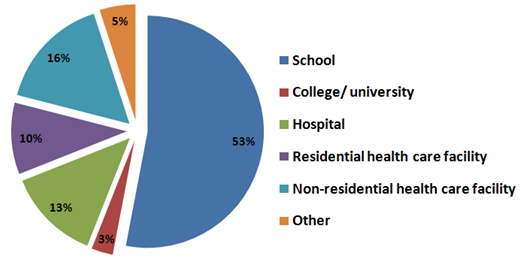
According to the U.S. Bureau of Labor Statistics (2024), the median annual wage for speech-language pathologists was approximately $89,290. ASHA Omnibus Survey data indicates median SLP salaries vary by setting: school-based practitioners earn a median of $75,000-$85,000; health care settings including hospitals, rehabilitation facilities, and skilled nursing facilities typically range from $85,000-$105,000; and private practice SLPs show a wider range based on practice volume. Specific salary ranges in the Southeast Texas region may vary.
Cost Estimates
You can find out about tuition and fee estimates by visiting LU's tuition and fees page.
Other Expenses
In addition to tuition and fees, students may need to consider other expenses. These include living expenses and travel expenses to attend clinical placements during year two. Texas living expenses are considered more economical when compared to the national average.
Financial Aid and Scholarships
The following scholarships are available for the students pursuing the MS in Speech-Language Pathology:
- Tony Houseman Memorial Scholarship
- Paula and John Lovoi Scholarship in Speech-Language Pathology
- Diane and Don Shaver Speech and Hearing Sciences Scholarship
Graduate Studies Scholarship: Eligible MS-SLP students may be considered for the Graduate Studies $1,000 scholarship, awarded automatically by the Graduate Studies Office each academic year based on funding availability. Eligibility criteria include good academic standing, full-time enrollment (9 credit hours in fall and spring; 6 credit hours in summer), not concurrently receiving the Doctoral Waiver or the Graduate Studies Award for In-State Tuition, and enrollment in a non-fully-online program. Awards are not guaranteed. For current eligibility criteria and award status, please contact the Graduate Studies Office directly.
For more information visit our department's scholarships
To learn more about financial aid/student loans, visit LU's student financial assistance website.
Research
Speech and Language Pathology faculty are involved in a variety of lab and field-based research. Please refer to faculty profiles to find out more about research interests and specific research studies.