Notification Letter
Alcohol and Other Drug Awareness and Prevention Policy Notification Letter
Lamar University has implemented the federally mandated Drug-Free Schools and Communities Act, which prohibits the unlawful manufacture, distribution, possession, or use of illicit drugs or alcohol by students and employees on University property, at any school activity, or while employees are on official duty. All faculty, staff, and students are required to obey the law and to comply with the Rules and Regulations of the Board of Regents of the Texas State University System and the institutional rules for Lamar University students as well as faculty and staff.
Lamar University is committed to ensuring the safety and health of its students and employees. This communication serves as official notice of the Drug-Free Schools and Communities regulations and the Drug and Alcohol Abuse Prevention regulations as found in Alcohol and Other Drug Awareness: Resources and Prevention. A summary of the mandates is attached and can also be found on the resource webpage. All students, faculty, and staff must read this attachment annually.
Further requirements include the completion of all incoming freshmen and new students to Lamar complete the Online Training for alcohol and drug education before the end of their first semester. Students required to complete this training receive their assignments through the Lamar email system.
For more information regarding Alcohol and Other Drugs, students may contact:
Dr. Freddie Titus, Vice President of Student Affairs and Strategic Initiatives
Associate Professor, Teacher Education
PO Box 10137, Beaumont, TX 77710
409-880-8918
Dr. Hector Flores, Chief of Operations/Chief of Police
Box 10013, Beaumont, TX 77710
409-880-8307
Dantrel Hargers, Student Conduct and Care Services
Box 10018, Beaumont, TX 77710
409-880-7759
Harold Hillyard, Title IX Coordinator
Box 10091, Beaumont, TX 77710
409-880-8163
Shawn Gray, MSN, RN, ACNP-BC, Assistant Vice President of Student Affairs and Strategic Initiatives
Box 10015, Beaumont, TX 77710
409-880-8466
For more information regarding Alcohol and Other Drugs, faculty and staff may contact:
Marsha Worthy, Assistant Vice President of Human Resources and Talent Management
Box 10027, Beaumont, TX 77710
409-880-8375
DRUG-FREE SCHOOLS AND COMMUNITIES ACT ANNUAL NOTIFICATION
The Drug-Free Schools and Communities Act and the Education Department General Administration Regulations policy require Lamar University to adopt and implement programs “to prevent the unlawful possession, use, or distribution of illicit drugs and alcohol by all students and employees on school premises or as part of any of its activities” (EDGAR Part 86, Subpart A 86.3).
STANDARDS OF CONDUCT
Employees
Human Resources Policy Manual:
- The unlawful manufacture, distribution, dispensing, possession, or use of a controlled substance and the abuse of alcohol in the workplace is expressly prohibited.
- All department chairs and supervisors of the institution are responsible for ensuring that the workplace is free from illicit drug use and alcohol abuse.
- All department chairs and supervisors of the institution shall also be responsible for the conformance of all employees with the provisions of this policy and all required procedures hereto.
Students
Code of Student Conduct:
- Committing an act that would constitute an offense under appropriate federal, state, or municipal law.
- Violating any published university policy, including policies or contracts relating to residential living in university-owned or operated facilities.
- Failing to comply with the direction of a university official acting in the performance of his or her duties, including an official summons to the office of an administrative official at a designated time.
- Violating published university policies on the possession or use of alcoholic beverages.
- Possessing, using, selling, or distributing any illegal drug, a controlled substance, and/or drug paraphernalia as defined by Texas Law.
- Possessing and/or using, without authorization according to university policy, intoxicating beverages in a classroom building, laboratory, auditorium, library building, faculty or administrative office, residence hall or apartment, intercollegiate and intramural athletic facility, or any other public campus area, or being intoxicated in any public area of the campus.
Residence Life Handbook:
- Alcoholic beverages are not permitted in any residence hall, regardless of the age of the student.
- Alcohol bottles and containers may not be kept in any resident’s room for any reason.
- If alcohol is found in the common area of the residential unit, both residents will be held responsible
- Possession of drugs and drug paraphernalia is prohibited.
- Residents found in possession of alcoholic beverages are subject to student conduct action and a $100 fine.
Medical Amnesty Protocol (Code of Student Conduct: 5.16):
To ensure that students’ safety and health come first in cases of underage possession and/or consumption of alcohol and/or illicit drug use, conduct action will not be pursued if:- the intoxicated student reports the incident and/or
- the intoxicated student or other students involved seek medical and/or health assistance from a university official or medical provider.
Campus-wide
Lamar University is a smoke-free and tobacco-free campus. This pertains to all tobacco products, including electronic cigarettes and vaping.
CAMPUS RESOURCES
Resources for Employees
Employee Assistance Program:
Any employee of Lamar University who has a drug or alcohol problem is invited to contact the Employee Assistance Program (EAP) provided through ComPsych to obtain confidential information about assistance. All services are free, completely confidential, and available anytime by calling the 24/7 toll-free helpline at 888-330-2562. For the username and password for the EAP website, visit the Lamar University Human Resources Department Employee Assistance Program webpage.
Resources for Students
Lamar University Student Health Center:
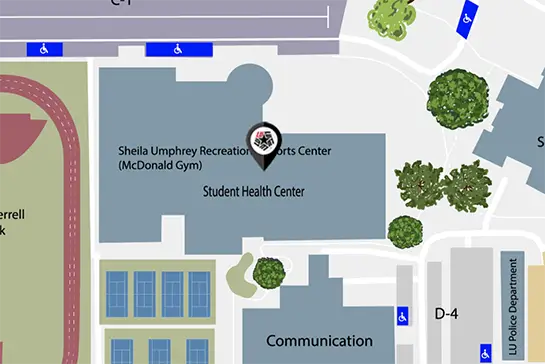
Confidential mental health counseling, including substance use and abuse counseling, is available to the students at Lamar University. The Student Health Center is located inside the Sheila Umphrey Recreational Sport Building at 4465 Jimmy Simmons Blvd, Beaumont, Texas 77705. Appointments are available by calling 409.880.8466. For additional information, visit the Lamar University Student Health Center web page.
HEALTH RISKS
Source: “Commonly Used Drugs.” National Institute on Drug Abuse, National Institutes of Health.
Alcohol (Ethyl Alcohol)
- Other names: Booze, juice, sauce, brew.
- Administration: Swallowed.
- Short-term effects: Injuries and risky behavior, including drunk driving and inappropriate sexual behavior; impaired judgment, coordination, and reflexes; slurred speech, memory problems.
- Long-term effects: Irregular heartbeat, stroke, high blood pressure; cirrhosis and fibrosis of the liver; mouth, throat, liver, and breast cancer.
- Tobacco
- Other names: Cigarettes, cigars, bidis, hookahs, smokeless tobacco (snuff, spit tobacco, chew).
- Administration: Smoked, snorted, chewed, vaporized.
- Short-term effects: Increased blood pressure, breathing, and heart rate.
- Long-term effects: Greatly increased risk of cancer, especially lung cancer when smoked and oral cancers when chewed; chronic bronchitis; emphysema, heart disease; leukemia; cataracts; pneumonia.
Inhalants
- Other names: Solvents, aerosols, and gases found in household products such as spray paints, markers, glues, and cleaning fluids; also, nitrites (e.g., amyl nitrite), which are prescription medications for chest pain. Poppers, snappers, whippets, laughing gas.
- Administration: Inhaled through the nose or mouth.
- Short-term effects: Confusion; nausea; slurred speech; lack of coordination; euphoria; dizziness; drowsiness; disinhibition, lightheadedness, hallucinations/delusions; headaches; sudden sniffing death due to heart failure (from butane, propane, and other chemicals in aerosols); death from asphyxiation, suffocation, convulsions or seizures, coma, or choking. Nitrites: enlarged blood vessels, enhanced sexual pleasure, increased heart rate, a brief sensation of heat and excitement, dizziness, headache.
- Long-term effects: Liver and kidney damage; bone marrow damage; limb spasms due to nerve damage; brain damage from lack of oxygen that can cause problems with thinking, movement, vision, and hearing. Nitrites: increased risk of pneumonia.
Marijuana
- Other names: Blunt, bud, dope, ganja, grass, green, herb, joint, Mary Jane, pot, reefer, sinsemilla, skunk, smoke, trees, weed. hashish: boom, gangster, hash, hemp.
- Administration: Smoked, eaten (mixed in food or brewed as tea).
- Short-term effects: Enhanced sensory perception and euphoria followed by drowsiness/relaxation; slowed reaction time; problems with balance and coordination; increased heart rate and appetite; problems with learning and memory; anxiety.
- Long-term effects: Mental health problems, chronic cough, frequent respiratory infections. In rare cases, risk of recurrent episodes of severe nausea and vomiting.
Synthetic Cannabinoids
- Other names: Black Mamba, Bliss, Bombay Blue, Fake Weed, Fire, Genie, K-2, Moon Rocks, Solar Flare, Skunk, Smacked, Spice, Yucatan, Zohai.
- Administration: Smoked, swallowed (brewed as tea).
- Short-term effects: Increased heart rate; vomiting; agitation; confusion; hallucinations, anxiety, paranoia; increased blood pressure.
- Long-term effects: The use of synthetic cannabinoids has led to an increase in emergency room visits in certain areas.
Methamphetamine
- Other names: Crank, chalk, crystal, fire, glass, go fast, ice, meth, speed.
- Administration: Swallowed, snorted, smoked, injected.
- Short-term effects: Increased wakefulness and physical activity; decreased appetite; increased breathing, heart rate, blood pressure, and temperature; irregular heartbeat.
- Long-term effects: Anxiety, confusion, insomnia, mood problems, violent behavior, paranoia, hallucinations, delusions, weight loss, severe dental problems (“meth mouth”), intense itching leading to skin sores from scratching.
Heroin
- Other names: Brown sugar, China white, dope, H, horse, junk, skag, skunk, smack, white horse, cheese (when mixed with OTC cold medicine and antihistamine).
- Administration: Injected, smoked, snorted.
- Short-term effects: Euphoria, dry mouth, itching, nausea, vomiting, analgesia, slowed breathing and heart rate.
- Long-term effects: Collapsed veins, abscesses (swollen tissue with pus), infection of the lining and valves in the heart, constipation and stomach cramps, liver and/or kidney disease.
Cocaine
- Other names: Blow, bump, C, candy, Charlie, coke, crack, flake, rock, snow, toot.
- Administration: Snorted, smoked, injected.
- Short-term effects: Narrowed blood vessels; enlarged pupils; increased body temperature, heart rate, and blood pressure; headache; abdominal pain and nausea; euphoria; increased energy, alertness; insomnia, restlessness; anxiety; erratic and violent behavior, panic attacks, paranoia, psychosis; heart rhythm problems, heart attack; stroke, seizure, coma.
- Long-term effects: Loss of sense of smell, nosebleeds, nasal damage, and trouble swallowing from snorting; infection and death of bowel tissue from decreased blood flow; poor nutrition and weight loss; lung damage from smoking.
MDMA/Ecstasy/Molly
- Other names: Adam, Clarity, Eve, Lover’s Speed, Peace, uppers.
- Administration: Swallowed, snorted.
- Short-term effects: Lowered inhibition; enhanced sensory perception; increased heart rate and blood pressure; muscle tension; nausea; faintness; chills or sweating; sharp rise in body temperature leading to kidney failure or death.
- Long-term effects: Long-lasting confusion, depression, problems with attention, memory, and sleep; increased anxiety, impulsiveness, disinterest in sex.
Synthetic Cathinones ("Bath Salts")
- Other names: Bloom, Cloud Nine, Cosmic Blast, Flakka, Ivory Wave, Lunar Wave, Scarface, Vanilla Sky, White Lightning.
- Administration: Swallowed, snorted, injected.
- Short-term effects: Increased heart rate and blood pressure; euphoria; increased sociability and sex drive; paranoia, agitation, and hallucinations; violent behavior; sweating; nausea, vomiting; insomnia; irritability; dizziness; depression, panic attacks; reduced motor control; cloudy thinking.
- Long-term effects: Death.
Fentanyl
- Other names: Dance Fever, Goodfellas, Great Bear, He-Man, Jackpot, King Ivory, Murder 8, Poison, and Tango & Cash.
- Administration: Placed in mouth or on tongue, dropped in eyes, transdermal patch, spraying in nose, injection, snorting, sniffing, smoking.
- Short-term effects: relief from pain, euphoria, drowsiness, confusion, nausea, constipation.
- Long-term effects: increased sensitivity to pain, respiratory depression, overdose, death.
PENALTIES
University Penalties
Employees:
- Drug testing
- Referral for drug counseling, rehabilitation, or employee assistance program
- Probation
- Termination
Students:
Any student who is found to have illegally possessed, used, sold, or distributed any drug, narcotic, or controlled substance, whether it occurred on or off-campus, shall be subject to discipline, ranging from a written warning to expulsion. Violators are also subject to criminal sanctions provided by federal, state, and local law.
Federal Penalties
Federal Trafficking PenaltiesSource: Drugs of Abuse, A DEA Resource Guide (2024 Edition).
The minimum sentence for a violation after two or more prior convictions for a felony drug offense that have become final is a mandatory term of life imprisonment without release and a fine of up to $20 million if an individual and $75 million if other than an individual.
Drug and Quantity: Cocaine (Sched. II), 500–4999 grams mixture. Cocaine base (Sched. II), 28–279 grams mixture. Fentanyl (Sched. II), 40–399 grams mixture. Fentanyl Analogue (Sched. I), 10–99 grams mixture. Heroin (Sched. I), 100–999 grams mixture. LSD (Sched. I), 1–9 grams mixture. Methamphetamine (Sched. II), 5–49 grams pure or 50–499 grams mixture. PCP (Sched. II), 10–99 grams pure or 100–999 grams mixture.
Penalties: First Offense: 5 to 40 years. If death or serious injury, 20 years to life. A fine of not more than $5 million if an individual, $25 million if not an individual. Second Offense: 10 years to life. If death or serious injury, life imprisonment. A fine of not more than $8 million if an individual, $50 million if not an individual.
Drug and Quantity: Cocaine (Sched. II), 5 kgs or more mixture. Cocaine base (Sched. II), 280 grams or more mixture. Fentanyl (Sched. II), 400 grams or more mixture. Fentanyl Analogue (Sched. I), 100 grams or more mixture. Heroin (Sched. I), 1 kg or more mixture. LSD (Sched. I), 10 grams or more mixture. Methamphetamine (Sched. II), 50 grams or more pure or 500 grams or more mixture. PCP (Sched. II), 100 gm or more pure or 1 kg or more mixture.
Penalties: First Offense: 10 years to life. If death or serious injury, 20 years to life. A fine of not more than $10 million if an individual, $50 million if not an individual. Second Offense: 20 years to life. If death or serious injury, life imprisonment. A fine of not more than $20 million if an individual, $75 million if not an individual.
Drug and Quantity: Other Sched. I & II drugs (and any drug product containing Gamma Hydroxybutyric Acid), Any amount. Flunitrazepam (Sched. IV), 1 gram.
Penalties: First Offense: Not more than 20 years. If death or serious injury, not less than 20 years, or more than life. Fine $1 million if an individual, $5 million if not an individual. Second Offense: Not more than 30 years. If death or serious bodily injury, life imprisonment. Fine $2 million if an individual, $10 million if not an individual.
Drug and Quantity: Other Sched. III drugs, Any amount
Penalties: First Offense: Not more than 10 years. If death or serious injury, not more than 15 years. A fine of not more than $500,000 if an individual, $2.5 million if not an individual. Second Offense: Not more than 20 years. If death or serious injury, not more than 30 years. A fine of not more than $1 million if an individual, $5 million if not an individual.
Drug and Quantity: All other Sched. IV drugs, Any amount. Flunitrazepam (Sched. IV), Other than 1 gram or more.
Penalties: First Offense: Not more than 5 years. A fine of not more than $250,000 if an individual, $1 million if not an individual. Second Offense: Not more than 10 years. A fine of not more than $500,000 if an individual, $2 million if other than an individual.
Drug and Quantity: All Sched. V drugs, Any amount.
Penalties: First Offense: Not more than 1 year. A fine of not more than $100,000 if an individual, or $250,000 if not an individual. Second Offense: Not more than 4 years. A fine of not more than $200,000 if an individual, or $500,000 if not an individual.
Drug and Quantity: Marijuana (Sched. I), 1,000 kg or more marijuana mixture; or 1,000 or more marijuana plants.
Penalties: First Offense: Not less than 10 years or more than life. If death or serious bodily injury, not less than 20 years, or more than life. Fine not more than life. A fine of not more than $10 million if an individual, $50 million if other than an individual. Second Offense: Not less than 20 years or more than life. If death or serious bodily injury, life imprisonment. A fine of not more than $20 million if an individual, $75 million if other than an individual.
Drug and Quantity: Marijuana (Sched. I), 100 kg to 999 kg marijuana mixture; or 100 to 999 marijuana plants.
Penalties: First Offense: Not less than 5 years or more than 40 years. If death or serious bodily injury, not less than 20 years, or more than life. Fine not more than life. A fine of not more than $5 million if an individual, $25 million if other than an individual. Second Offense: Not less than 10 years or more than life. If death or serious bodily injury, life imprisonment. A fine of not more than $20 million if an individual, $75 million if other than an individual.
Drug and Quantity: Marijuana (Sched. I), More than 10 kg of hashish; 50 to 99 kg marijuana mixture; more than 1 kg of hashish oil; 50 to 99 marijuana plants.
Penalties: First Offense: Not less than 20 years. If death or serious bodily injury, not less than 20 years, or more than life. Fine of $1 million if an individual, $5 million if other than an individual. Second Offense: Not less than 30 years. If death or serious bodily injury, life imprisonment. Fine of $2 million if an individual, $10 million if other than an individual.
Drug and Quantity: Marijuana (Sched. I), Less than 50 kilograms of marijuana (but does not include 50 or more marijuana plants regardless of weight) 1 to 49 marijuana plants; Hashish (Sched. I), 10 kg or less; Hashish Oil (Sched. I), 1 kg or less
Penalties: First Offense: Not less than 5 years. Fine not more than $250,000; $1 million if other than an individual. Second Offense: Not less than 10 years. Fine of $500,000 if an individual, $2 million if other than an individual.
State Penalties
Penalties Under Texas Law
Source 1: Texas Controlled Substances Act, Tx. Stat. §§ 481.112-481.121.
Source 2: Penal Code: Intoxication and Alcoholic Beverage Offenses, Tx. Stat. §§ 49.02-49.09.
Source 3: Penal Code: Punishments, Tx. Stat. §§ Chapter 12.
Offense: Manufacture or delivery of controlled substances (drugs) in penalty group 1
Penalties: Minimum: 180 days to 2 years of confinement and a fine up to $10,000. Maximum: 15 to 99 years of confinement and a fine up to $250,000.
Offense: Manufacture or delivery of controlled substances (drugs) in penalty groups 2, 3, 4
Penalties: Minimum: 180 days to 2 years of confinement and a fine up to $10,000. Maximum: 10 to 99 years of confinement and a fine up to $100,000.
Offense: Possession of controlled substances (drugs) in penalty group 1
Penalties: Minimum: 180 days to 2 years of confinement and a fine up to $10,000. Maximum: 10 to 99 years' confinement and a fine up to $100,000.
Offense: Possession of controlled substances (drugs) in penalty group 2
Penalties: Minimum: 180 days to 2 years' confinement and a fine up to $10,000. Maximum: 5 to 99 years' confinement and a fine up to $50,000.
Offense: Possession of controlled substances (drugs) in penalty group 3
Penalties: Minimum: Up to 1 year confinement and/or a fine up to $4,000. Maximum: 5 to 99 years confinement and a fine up to $50,000.
Offense: Possession of controlled substances (drugs) in penalty group 4
Penalties: Minimum: Up to 180 days of confinement and/or a fine up to $2,000. Maximum: 5 to 99 years of confinement and a fine up to $50,000.
Offense: Delivery of Marijuana
Penalties: Minimum Penalty: Up to 180 days of confinement and/or a fine up to $2,000. Maximum Penalty: 10 to 99 years' confinement and a fine up to $100,000.
Offense: Possession of Marijuana
Penalties: Minimum: Up to 180 days of confinement and/or a fine up to $2,000. Maximum: 5 to 99 years' confinement and a fine up to $50,000.
Offense: Driving while intoxicated (includes intoxication from alcohol, drugs, or both)
Penalties: 1st offense: 72 hours to 180 days confinement and/or up to $2,000 fine, license suspension of 90 days to 1 year. Multiple offenses: 2 to 10 years confinement, up to $10,000 fine, license suspension of 180 days to 2 years, ignition interlock device for 1 year. Offense: Driving while intoxicated with a minor under 15 years of age (includes intoxication from alcohol, drugs, or both)
Penalties: 1st offense: 180 days to 2 years of confinement, and a fine up to $10,000. Multiple offenses: 2 to 10 years' confinement, up to $10,000 fine, license suspension of 180 days to 2 years, ignition interlock device for 1 year.
Offense: Public intoxication
Penalties: Fine of up to $500.
Texas Underage Drinking Laws
Source: “Underage Drinking.” Texas Alcoholic Beverage Commission.
Offense: Purchase or attempt to purchase alcohol by a minor; Consumption of alcohol by a minor; Possession of alcohol by a minor; Public intoxication of a minor
Penalties: Minimum: Class C misdemeanor: fine up to $500, alcohol awareness class, 8 to 40 hours of community service, 30 to 180 days loss or denial of driver's license. Maximum: If 17 or older, the fine is $250 to $2000, confinement in jail up to 180 days or both, and automatic driver's license suspension.
Offense: Minor driving under the influence of alcohol
Penalties: Minimum: Class C misdemeanor: fine up to $500, alcohol awareness class, 20 to 40 hours of community service, 60 days loss or denial of driver's license. Maximum: On a 3rd offense, the fine is $500 to $2,000, confinement in jail up to 180 days, or both; automatic driver's license suspension for 180 days. If a minor is 17 or older, the fine increases to $500 to $1000, confinement in jail for up to 180 days, or both.
Offense: Providing alcohol to a minor
Penalties: Class A misdemeanor: up to $4000 fine, confinement up to a year in jail, or both. Driver’s license suspended for 180 days when minor is convicted. Sale to a minor: Class A misdemeanor: fine up to $4000, confinement in jail up to one year, or both.
Contact LU Health Education
Jayna Bonnette
Assistant Director of Health Education
jlacy2@lamar.edu | 409-880-8466


Sara E. Chavez
Program Coordinator of Health Education
sflores42@lamar.edu | 409-880-7865
SUICIDE PREVENTION LIFELINE
CALL 988
or
1-800-273-8255
CRISIS TEXT LINE
Text "HOME" to 741741
Envía un texto con la palabra AYUDA a 741741
EMERGENCY
On campus: (409) 880-7777
or use emergency phones (poles with blue lights)
Off campus: 911

CONTACT THE SHC
Phone: (409) 880-8466
Fax: (409) 880-7703
Email: shc@lamar.edu
PHYSICAL ADDRESS
4465 Jimmy Simmons Blvd.
Beaumont, TX 77705
Inside the Sheila Umphrey Recreational Sports Center
 Mental Health Services Available