
Dr. Terri Davis reflects on 30 years in the classroom
For Dr. Terri Davis, the law has never just been about statutes or courtrooms. It’s been about people and how they think, argue and understand the world around them. 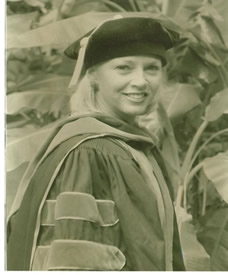
After 30 years at Lamar University (LU), Davis has spent decades shaping generations of pre-law students, helping build the university’s Legal Studies program into one of the strongest pipelines on campus. The program has maintained a 100% law school acceptance rate over the last five years, with graduates attending schools across the country, including Harvard Law School.
But Davis doesn’t describe herself through rankings or awards.
“I call myself a blue-collar scholar,” she said.
Growing up in Sulphur Springs, Texas, Davis said higher education was never guaranteed. Neither of her parents graduated high school, and as a young woman in the 1960s and ’70s, she often felt boxed in by expectations of what women were “supposed” to study.
Instead, she pursued journalism and political science, eventually working as a paralegal while attending school at night. It took her nine years to finish her undergraduate degree before she faced a choice between law school and doctoral programs.
“I realized I didn’t want to be a lawyer,” Davis said. “I wanted to be a scholar of the law.”
That decision shaped the rest of her career.
 Davis earned her Ph.D. in government from The University of Texas at Austin, studying under renowned political scholar Jeffrey Tulis. Her dissertation, “Multiculturalism and States’ Rights: An Analysis of the Paradoxes of American Constitutional Discourse,” reflected the same fascination with constitutional interpretation that still drives her teaching today.
She specializes in constitutional law, judicial politics and administrative law, teaching students to examine court opinions not as static legal doctrine, but as reflections of culture and history.
“I look at constitutional law as an anthropological artifact,” she said. “It’s a timestamp of cultural change.”
Inside her classroom, Supreme Court cases become stories. Students dissect majority, concurring and dissenting opinions the way literature students might analyze novels. Davis pushes them to question assumptions, defend arguments and think beyond gut reactions.
“My job is to mess you up,” she said with a laugh. “My job is to make you think critically enough that you can form your own autonomous opinions.”
Students quickly learn unsupported opinions do not go far in her classroom.
“I tell them all the time: I don’t care what you think. I care how you think,” she said.
That philosophy has helped create a deeply connected alumni network. Former students now work as attorneys, professors, judges, city managers and elected officials, many of whom continue mentoring current students decades later.
At one point, after funding cuts threatened LU’s moot court program, Davis and colleagues raised thousands of dollars from alumni in less than a day to keep students competing.
“They’re always Cardinals,” she said.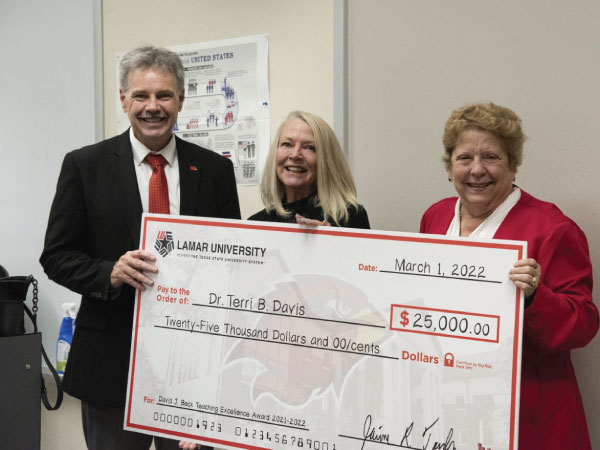
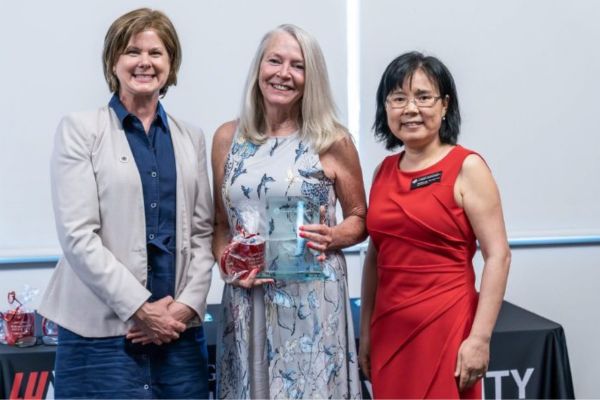
Over the years, Davis has become one of LU’s most decorated professors. She has received the David J. Beck Teaching Excellence Award, the University Merit Award, the Distinguished Faculty Lecturer honor and the Liberty Bell Award from the Jefferson County Bar Association for her commitment to constitutional education. National organizations including American Political Science Association and Pi Sigma Alpha have also recognized her teaching excellence.
Her research and writing span constitutional law, political theory and Texas government. Her publications have appeared in journals including Sage OPEN, Comparative Sociology and History of European Ideas. In 2017, she co-authored The Texas Constitution: The People, History, and Government of the Lone Star State with political scientist James Nelson.
Still, Davis speaks most proudly about former students.
“I know their lives were enriched,” she said. “Not just the lawyers. The mothers, the teachers, the people who became better citizens because they learned how to think critically.”
Outside the classroom, Davis’ life looks far different from the high-pressure world of constitutional law.
She plans to retire within the next few years and move to Nacogdoches, where she plans to spend weekends gardening, growing vegetables and building greenhouses. She talks about soil chemistry and tomato plants with the same intensity she brings to constitutional theory.
 “It’s the only time my brain totally shuts down,” she said.
Even retirement, though, will not pull her entirely away from scholarship. Davis hopes to continue researching constitutional history, particularly Chief Justice John Marshall and the nation’s founding era — a subject she has spent years studying through archival research and historical documents.
Despite changes in higher education, shifting technology and the rise of AI in classrooms, Davis said she still finds fulfillment in teaching.
“If I can have that one student a semester where the light bulb goes off,” she said, “I’ll keep coming back.”
When asked how she hopes students remember her, Davis paused before answering.
“She seemed so mean,” she said, laughing, “but she changed my life forever by teaching me how to think.”