Impact Articles
Distinguished Teaching Faculty Fellowship Award
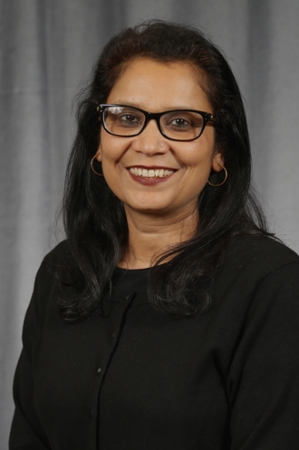
Dr. Mamta Singh received Distinguished Teaching Faculty Fellowship Award in 2018. This award allowed Dr. Singh to conduct research in science teaching and learning primarily with pre-service teachers. As a result, Dr. Singh submitted two research articles for publication and in 2020 the following two articles which are accepted for publication in Journal of College Science Teaching. (1) Singh, M. (2020). E-6 Pre-Service Teachers & Elementary Science Teaching: Assessing Confidence & Content Knowledge, Journal of College Science Teaching (Accepted). (2) Singh, M. (2020). Assessing Pre-service Teachers’ Experience with Wind Energy Education Through Cooperate Learning Experience, Journal of College Science Teaching (Accepted).
Additionally, in fall 2019, Dr. Singh developed MASON STEM Initiative project proposal to recruit and retain STEM major teachers to provide them an opportunity to a teaching pathway. The overarching goal of the project is to attract qualified STEM majors to pathway to teaching who otherwise would not have considered teaching as an option in their career and to increase qualified STEM teacher candidates. The project did a pilot case study in summer 2019.
The findings from the study - Assessing Elementary Students’ Knowledge and Understanding of “Organic” & “GMOs” has also been submitted in Journal of College Science Teaching, which is currently under review. Dr. Singh along with biology and engineering faculty members implemented the MASON STEM Initiative project in summer 2020. The program survey results suggested that 100% student participants had a positive K-12 teaching and learning experience and 75% of the student participants indicated the program increased their interest in becoming K-12 science teacher. Furthermore, Dr. Singh was an invited presenter at 3rd Annual Rio Grande Valley STEM Education Conference on February 13th-15th 2020 at McAllen, TX. Due to the COVID-19 Pandemic, she participated in two virtual STEM conference presentations: (1) Elementary Students Exploring Genetic Engineering Education at “2020 STEMS² Symposium,” conducted by University of Hawaii on June 25th 10:30 a.m. – 11:30 a.m. HST. (2). Facial Scrubs & Pollution: Creating Environmental Awareness Among Elementary Students at The Publishing & Digital Learning Solution’s Virtual Conference, Leading Through Digital Innovation. Region 4 Education Service Center. July 16th, 2020, 10:30 a.m. – 11:30 a.m. CT.
Written by Dr. Mamta Singh
Standing on the Shoulders of a Giant: J.P. Guiliford
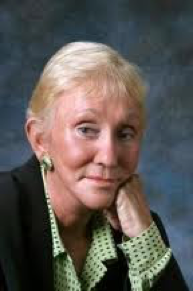
Dr. Dorothy Sisk was a keynote speaker at the International Conference on Knowledge, Innovation and Enterprise on July 21, 2020. Her topic was Standing on the Shoulders of a Giiant: J.P. Guiliford.
J.P. Guilford had a profound effect on a wide audience of psychologists, educators, and college and university students with his Presidential Address to the American Psychological Association conference in 1950. J.P. was concerned about the lack of correlation between education and creative production. He shared two questions that need to be addressed: How can we discover creative promise in our children and youth? and How can we promote the development of creative personalities. These two questions became J.P. Guilford's professional passion, and they became mine as well over the next fifty years.
My undergrad professor of Psychology at Mount Union College in Alliance, Ohio attended the APA conference and asked us to identify a creative individual, investigate their life and work, note their creative behavior traits, and identify mentors who helped them discover their creative promise. I chose Shel Silverstein and interviewed him at a colloquium at Mount Union. Silverstein described himself as open, a dreamer and in love with nature. He said as a student he was serious, persistent and able to focus on projects that he chose, but he was not his teachers' favorite. Silverstein's mentor was Ursula Nordstrom, a book editor who encouraged him to write books for children which resulted in his powerful story, The Giving Tree which was translated into 20 different languages. When he addressed the question of how to promote the development of creative promise, he said students need more time to pursue their own ideas and projects and time to reflect and dream.
After graduating from Mount Union, I moved to California and taught gifted classes at the elementary, middle and high school levels. I earned a M.A. from California State University in Long Beach and applied to UCLA for a doctorate. My advisor encouraged me to work on the question of developing creative promise in children and suggested I ask J. P. Guilford at the University of Southern California if I could use his Alternative Uses test. I called to make an appointment with Dr. Guilford and he graciously agreed to talk to me about my dissertation.
J.P. was intrigued with the idea of testing the students (grade 4) with his Alternative Uses test as a pre and posttest after the students received enrichment lessons that I called encounter lessons. He asked who my advisor was, and I said, "Dr. May Seagoe." At which point, he looked amazed and said, "Aren't you one of our students?" When he realized that I was a student at UCLA, he gave me a wide grin and said he would be happy to help in any way he could and gave me a copy of the Alternative Uses test. The test asks the respondent to think of as many uses as possible for a single object, and it yields a score in fluency, flexibility, and originality. The students in my study enjoyed the Encounter lessons and the difference from the pre-test was significant at the .01 level. But more important the change in their classroom behavior, represented transfer of behavior and skills from the study including curiosity, deep listening, willingness to ask questions, and explore new ideas.
J.P. was working on the Structure of Intellect (SOI) I model as a classification of intellectual abilities arranged in a three-way fashion to encompass and organize intellectual aptitude factors. As he continued to modify the model, it increased from the original 120 factors to 180. J. P. Guilford's greatest achievement was paving the way for thinking about intelligence not as a single overall ability or global trait, but as a large number of abilities, and that children can be trained to be smarter. His motto was Intelligence Education is Intelligent Education. This notion of teaching intelligence reduces the impact of heredity as a limiting factor of intelligence and complements the later work of Carol Dweck's growth mindset, and Howard Gardner's multiple intelligences. J.P. was truly an individual who many educators and psychologists world-wide would agree that they have stood on the shoulders of this giant who was phenomenally gifted and productive.
Written by Dr. Dorothy Sisk