Impact Articles
Digital Learning and Leading Professors Conduct Online Blended Learning Labs
During the COVID-19 pandemic, Dr. Dwayne Harapnuik and Dr. Tilisa Thibodeaux reached out to the broader community of educators, both recent graduates, alumni and local area teachers to offer an online blended learning lab. The goal of the learning lab was to model and immerse educators in a synchronous session using digital tools that would augment, enhance and support instructional models for teaching online for the upcoming 2020-21 school year. Over 137 participants signed up, and due to overwhelming demand, three one-hour learning labs were hosted over Zoom that allowed educators to connect with other educators across the nation while learning how to effectively create significant digital learning environments for their students. Drs. Harapnuik and Thibodeaux have spent the last 15+ years co-developing the CSLE+COVA framework that was modeled in the online blended learning labs. The CSLE+COVA is also used in the Digital Learning and Leading and Educational Technology Leadership Program. Additional online blended learning labs will be scheduled the Fall and Spring of the 2020-21 school year that will include a variety of highly requested topics for discussion around digital learning. The DLL professors were able to conduct the online blended learning labs as part of the STEM gift to the College of Education and Human Development.
Written by Dr. Tilisa Thibodeaux
Digital Learning and Leading Program Partners with the Center of Education Innovation & Digital Learning and Apple, Inc.
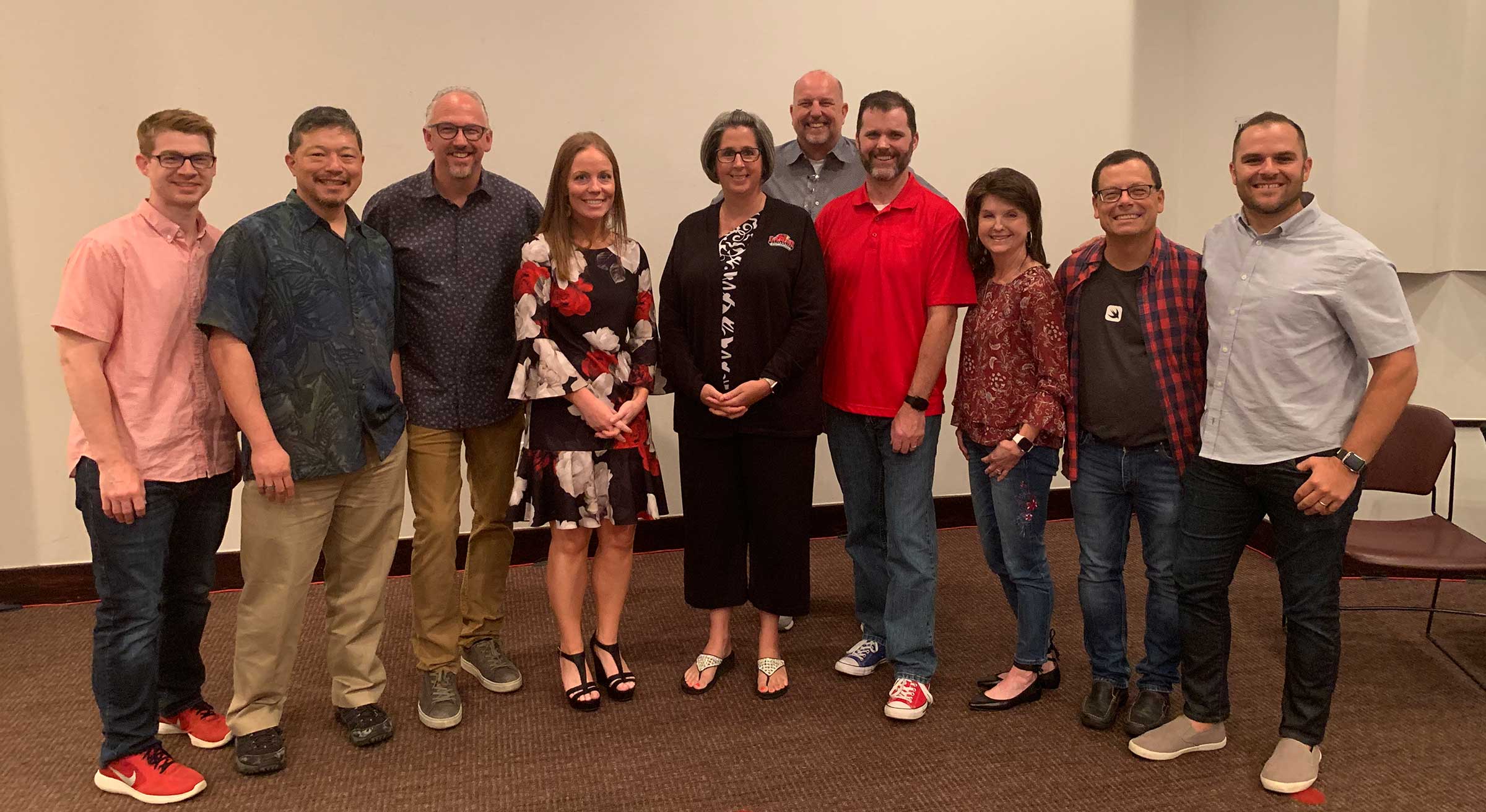 The Center of Education Innovation and Digital Learning at Lamar University, the College of Education and Human Development and Apple, Inc. partnered to provide a professional learning experience for educators to learn principles of computational thinking to implement coding into their classroom instruction. This partnership included eight districts and over 50 teachers in Houston and Austin and surrounding areas during the 2019-20 school year. In conjunction with Dr. George Saltsman and Tammy Comeaux from the Center of Innovation and Digital Learning, lead mentor teachers, and the DLL program professors, Drs. Tilisa Thibodeaux and Dwayne Harapnuik, the educators involved in this partnership spent one-year learning to code with Apple after given Apple devices and spent an entire year in a professional learning program designed by the DLL program professors. The one-year PL experience offered graduate credit for these educators to start one of the M.Ed. or Ed.D. programs in the College of Education, which many of these educators took advantage of.
Overview of the Professional Learning Program
The Professional Learning experience used principles of constructivism and collaborative learning to allow teachers the opportunity to explore and create using coding software but was flexible to allow teachers freedom to build and develop their own ideas and innovation plans to impact their students and learning environments. Through weekly meetings that consisted of large group and cohort support over Zoom, educators were able to implement coding into their curriculum and develop their computational thinking skills while working closely with their students, mentors and professional networks. The PL experience allowed educators to choose their own innovation plans and pitch their own ideas, ultimately implementing those ideas within their classrooms, their schools and communities.
Large group weekly sessions involved discussions around innovation planning and an overview of the next steps of the professional learning experience, with an offering for individual assistance from DLL professors, mentors, and the Center of Innovation & Digital Learning. In addition to large group meetings, small group cohort sessions were held every other week with cohort leads. Small group cohorts were grouped by level (elementary, middle, high) and offered coding and computational thinking support alongside innovation proposals and planning with DLL professors. Innovation project ideas included all ages coding camps, elementary coding literacy, building computational thinking into the curriculum, family coding nights, etc. Educators posted their innovation proposals to their ePortfolios to garner support for their ideas from their schools and the broader community.
Written by Dr. Tilisa Thibodeaux