Funding the Foundations of College Student Success: Why Extracurricular Activities Deserve Institutional Priority
COMMENTARY - May 06, 2026
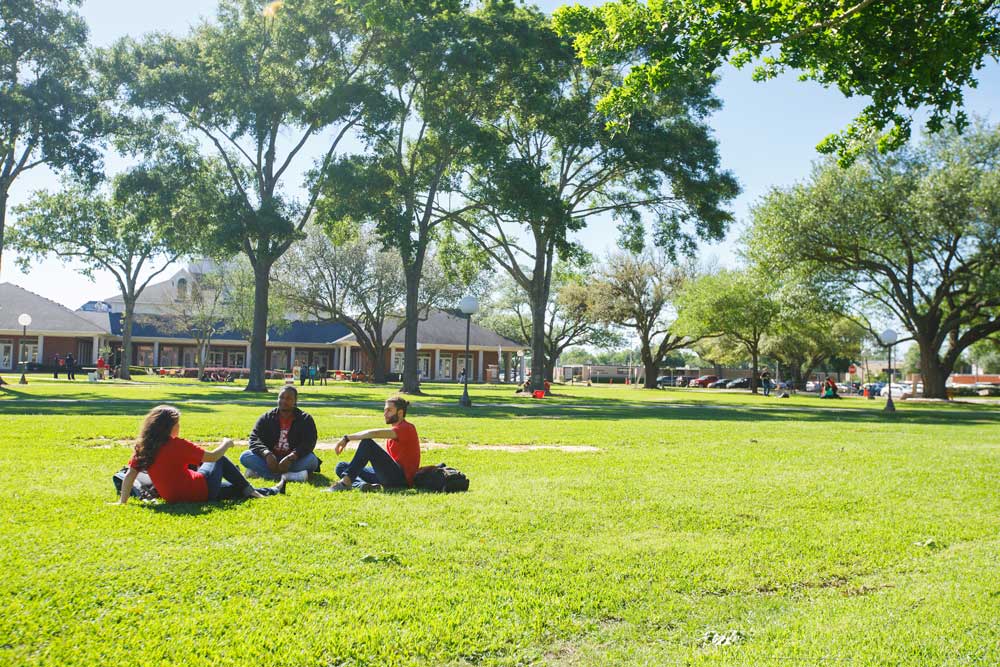
Photo by Lamar Univeristy
Students sitting on open green space
 By Le'Keisha D. Johnson Resiliency Fellow, Lamar University Center for Resiliency
This commentary was originally published by The CfR Research and Commentary on April 26, 2026
At my institution, a university in south central Texas, the student services fee funds our student involvement office. All enrolled students pay the mandatory student services fee, and our student services fee committee manages distribution of funds collected. The student services fee committee is governed by a policy, Texas education code section 54.5031, which requires the student services fee committee to include a majority of students, with five student members and four members who are representative of the entire institution, appointed by the president of the institution. The student services fee committee determines how student services fee funds are distributed amongst departments that serve and benefit students. Determination is based upon funding request presentations and a majority vote on which departments will receive funding, as well as how much funding will be distributed.
Since there are often competing priorities for university funding, student involvement offices must advocate for support of their departments and empower university administrators and policy makers with evidence-based reasons for financially supporting student involvement offices. Here are a few benefits provided by student involvement offices through extracurricular activities:
Extracurricular activities compliment classroom learning through professional skill development. The university environment plays a pivotal role in student success, with formal and informal structures, such as extracurricular activities. Studies discuss how participation in extracurricular activities, such as student organizations, helps college students increase their capacity through the development of skills that are not easily developed in the classroom. Extracurricular activities serve as a bridge between academic life and professional development.
Extracurricular activities support student connectedness. Connectedness, through social engagement and ongoing involvement, is directly linked to retention and improved engagement Across learning modalities—in-person or online—students have need for connectedness, engagement, and support. Connectedness developed through peer support networks, faculty relationships, and student organizations plays a critical role in reducing stress, enhancing academic performance, and developing career readiness through professional skill development.
Extracurricular activities help students develop resilience. Extracurricular activities cultivate meaningful peer relationships and social support networks, which increases resilience and reduces stress. Resilience is a skill gained through involvement in extracurricular activities, such as student organization participation. Studies determined that resilience is a key attribute for 3 student academic success, and the development of resilience occurs through an interactive process between the student and the university. Participation in student organizations and communities, amongst other services offered by a university, plays a role in the development of resilience.
College students in southeast Texas and beyond can benefit from involvement in extracurricular activities, but support from administration and policy makers is needed to protect these types of opportunities. As universities experience budget cuts across Texas and the country, it is imperative that university administrators continue to advocate for funding for student involvement offices that provide opportunities for extracurricular activity participation. Benefits from these activities lead to professional skill development, connectedness, and resilience which supports persistence and degree completion.
More About
Le'Keisha D. Johnson is a doctoral student in the educational leadership program at Lamar University. She is also a member of the inaugural cohort for the Center for Resiliency fellowship program with research focused on the impact of extracurricular activities on graduate student connectedness and capacity building. LaKeisha’s goal for participating in the fellowship is to develop the skill of conducting research focused on resiliency and to learn how to translate her expertise into knowledge that can positively impact communities in southeast Texas and beyond. ljohnson134@lamar.edu Expertise: Graduate Studies; Extracurricular in higher education; Student Success.
Topics
Student Involvement
Student Engagement
Leadership Development
Professional Skills
Campus Connectedness
Funding Advocacy
Student Organizations
Higher Education Support